Compressed Air Piping Design: Best Practices for Industrial Efficiency
03 December 2025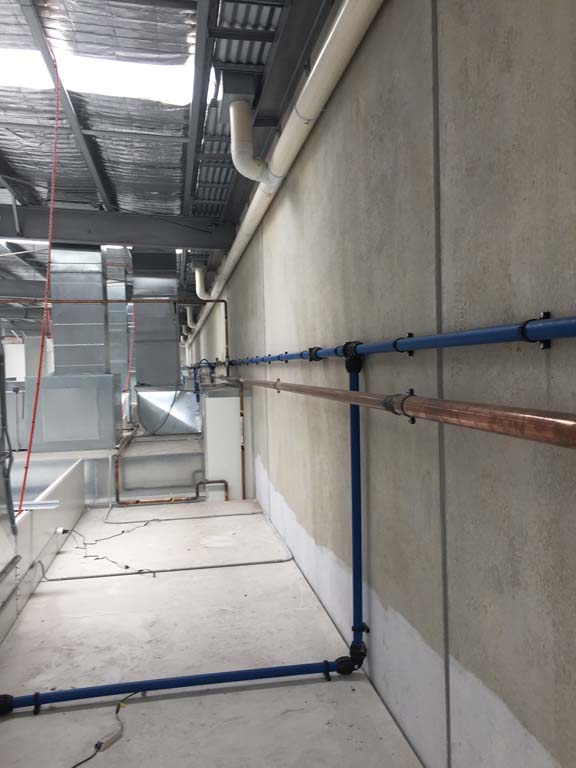 Achieve industrial efficiency with Redrock Contracting’s compressed air systems piping design. Trusted Melbourne experts in compliant installations.
Efficient compressed air piping networks are essential in modern industrial plants to reduce energy waste, maintain pressure stability, and support future expansion. Compressed air systems piping design determines how effectively air is delivered to end-use equipment without loss or contamination. Proper layout, material selection, and system optimisation ensure consistent pressure, reduced operating costs, and long-term reliability.
Flow & Pressure Loss in Compressed Air Systems: Piping Design
Selecting pipe diameters, minimising friction, and managing changes in direction critically affect performance. Pressure drop in a poorly designed network forces compressors to work harder, raising operational costs. Applying design equations and conservative margins ensures reliable performance under full load.
Thermal expansion, condensation, and air quality must also be considered during layout. If pipelines are exposed to heat or fluctuating ambient conditions, allowance for expansion and drainage paths is essential. These subtle factors differentiate robust systems from those that underperform.
Loop vs Branch Layouts for Reliability
Looped or ring mains promote redundancy and reduce single-direction pressure drop. In contrast, branch or dead-end layouts can experience significant losses at distant outlets. Industry guidance supports ring main configurations as best practice for consistent system pressure and simplified maintenance.
Detailed velocity and sizing recommendations are outlined in the Designing Low-Pressure-Drop Piping Systems for Optimal Compressed Air Flow guide by Compressed Air Best Practices. Advanced configurations often integrate cross-tie and longitudinal loops to isolate specific zones for servicing without interrupting the entire network, ensuring greater reliability and maintenance flexibility.
Pipe Material Selection & Corrosion Control
Material choice within compressed air systems’ piping design directly influences corrosion resistance, cleanliness, and durability under varying pressures. Aluminium, stainless steel, and high-grade polyethylene (PE) provide superior internal surface quality and extended service life in industrial networks.
Low-grade steel and iron components are prone to rust, scaling, and flow restriction that degrade performance over time. Modular press-fit and quick-connect assemblies enhance sealing integrity, minimise leak potential, and simplify future upgrades or system modifications.
Installation & Maintenance Best Practices
Here is a concise set of actionable steps to embed the principles of compressed air systems piping design in your construction and upkeep:
• Maintain gentle slopes and drainage – Ensures condensate drains naturally, avoiding water hammer and moisture accumulation.
• Minimise sharp bends and sudden changes – Reduces turbulence and pressure drop across elbows or tee joints.
• Install isolation valves and bypass loops – Allows sections to be taken offline for maintenance without shutting entire network.
• Use appropriate supports and expansion loops – Prevents sagging or stress during thermal cycling or vibration.
• Label and colour-code your system per standards – Ensures safety, ease of maintenance, and compliance.
Achieving Reliable Operations with Redrock Contracting
Well-planned compressed air systems piping design ensures operational reliability and cost efficiency throughout an asset’s life cycle. At Redrock Contracting, we deliver tailored compressed air and mechanical solutions that align with Australian compliance and project requirements. Our specialists focus on durable system construction, seamless integration, and long-term efficiency improvements for industrial facilities.
Contact us today to transform your facility’s compressed air infrastructure into a reliable, efficient asset.
Related Blog Article: Compressed Air Installation for Industrial & Manufacturing Facilities: Expert Setup for Type B Gas & High-Pressure Systems
Optimized by: Netwizard SEO